Wow, that title sounded a bit too ambitious. That's a very tough call. Maybe it's more like "my favorite five sci-fi books of all time". Anyway, here they are—and why:
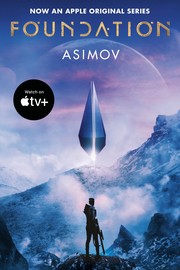
1. Foundation by Isaac Asimov (1951)
A trilogy that was expanded to a series of seven novels, but for me the trilogy is the core. A huge influence on any space based sci-fi story to come, outlining a galactic empire rising and falling (did you enjoy the book George Lucas?). I really like how events on a massive scale, and just singel individuals, push and pull the history of humanity through peaceful times and dark ages. I've never stopped thinking about the science "psychohistory" invented in these books, where you can predict the future by extrapolating from history and human behavior. By the way, the series adaptation on Apple TV is pretty good.
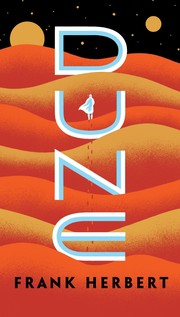
2. Dune by Frank Herbert (1965)
First part of a series of novels, where I think, again, the first three is the core. A story that feels ancient, current and futuristic at the same time. The desert planet Arrakis holds the critical resource, spice. Whoever controls the spice, controls the galaxy. Herbert weaves an intricate story with layers of politics, mysticism and human behavior. Like Foundation, this is impressive storytelling on a large scale.
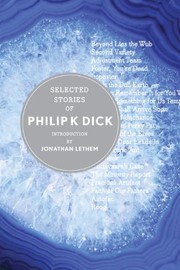
3. Everything by Philip K. Dick
Ok, there's no book called "Everything". I'm just amazed by all the unique and creative ideas Philip K. Dick managed to put down in writing. One of my favorite movies Blade Runner is based on his novel Do Androids Dream of Electrical Sheep? In fact, a lot of his work has become movies. His ideas often pop into my mind, for example right now, when I see the war between Russia and Ukraine, where weaponized drones are becoming more autonomous. I'm thinking about the short story Second Variety (adapted to the movie Screamers) where autonomous weapons start to build themselves, and in the end become impossible to distinguish from humans, in order to infiltrate and kill the enemy (that's us 😬).
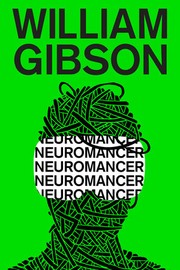
4. Neuromancer by William Gibson (1984)
A cyberpunk classic, even if it might not have invented the concept. But it propelled cyberpunk into mainstream in a way that's still present today. However, Gibson came up with the term "cyberspace" in the story Burning Chrome, the precursor to Neuromancer. I think it's mindblowing how he could imagine this digital space in the 80s—a matrix where you could "jack in" and hack systems. Remember, this was at least ten years before the web became a thing. Like all good things, it's a part of a trilogy (Sprawl), and it was followed by Count Zero (1986) and Mona Lisa Overdrive (1988).
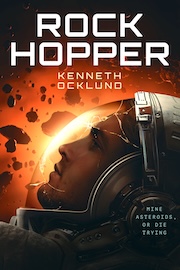
5. Rock Hopper by Kenneth Ocklund (2025)
The origin story of the first lone asteroid miner (Rock Hopper), starting with two empty hands and striking it big in the asteroid belt between Mars and Jupiter. Everything I like in one book: It's story-driven, fast-paced, high-stakes, has secret plots and unexpected turns, and characters you love—or love to hate—or even hate that you love (it's complicated). Of course it's one of my favorites, since I wrote it how I wanted to read it.